May 19, 2013

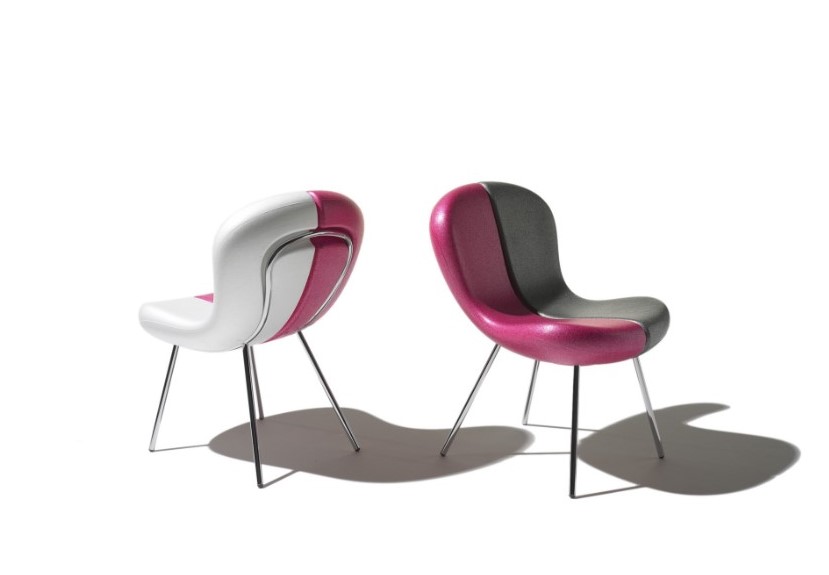
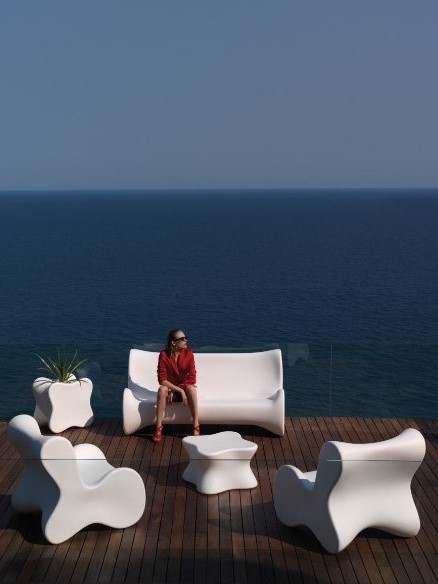
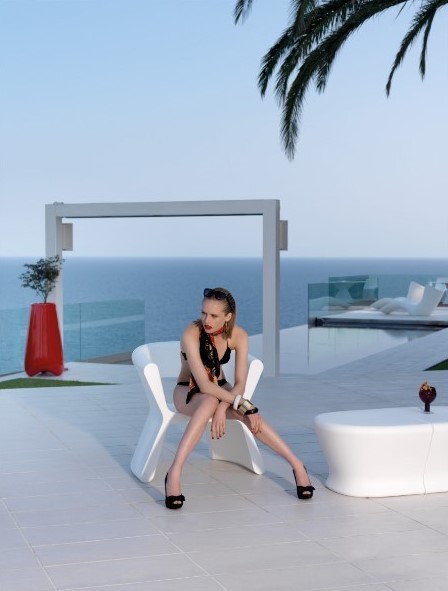
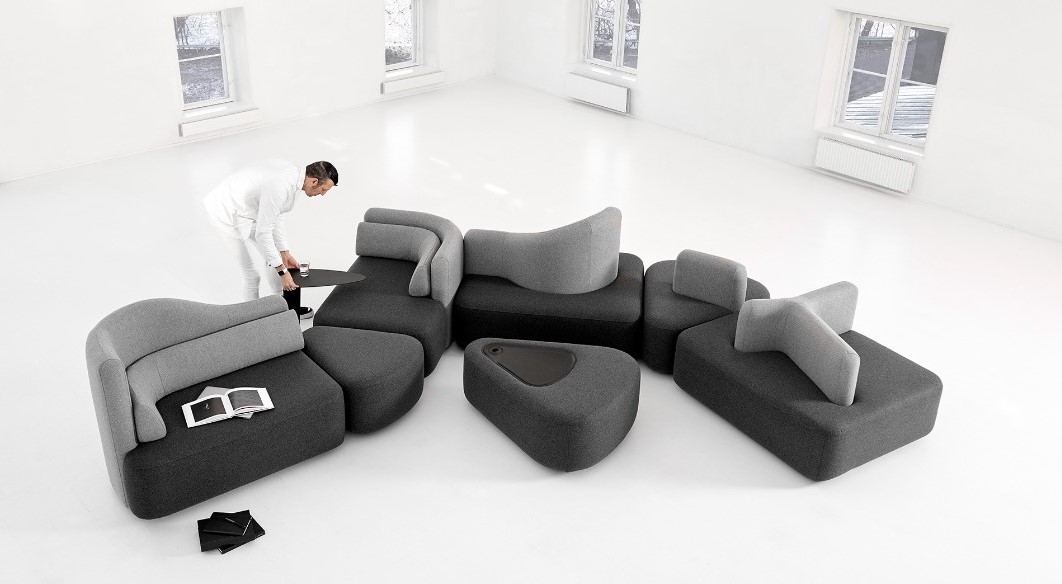
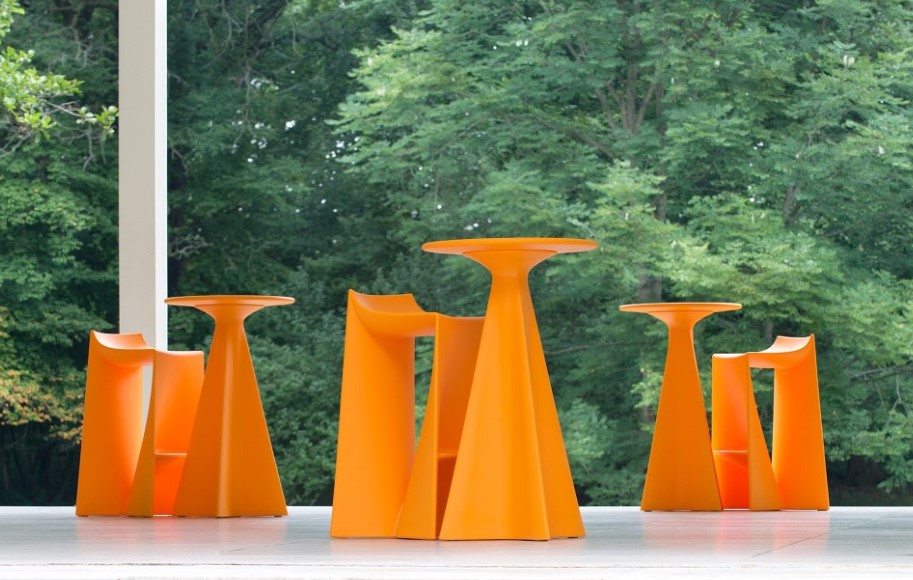
B & B ITALY PAPILIO SERIES DESIGN BY NAOTO FUKASAWA


A
B & B ITALIA GRANDE PAPILIO DESIGN BY NAOTO FUKASAWA 2009
A

B & B ITALIA GRANDE PAPILIO DESIGN BY NAOTO FUKASAWA 2009

As with the original Papilio chair, and not only due to the zip along the back, the Grande Papilio armchair appears as a single form made of a single material. Its shape is a fluid design carved out of the trunk of an upside-down cone, where the roomy upper part and backrest are truly pronounced, offering the ultimate comfort and relaxation. Equipped with a swivel system that provides a 360° view of the room, this armchair sets itself apart thanks to its organic and statuesque design. The seat also has an ottoman to offer yet another relaxing position.
Quality
Our quest for quality in every aspect has always ensured excellence at B & B Italia. Discover the quality of the materials that go into our products.

A
A 

 A

A
 A

A
B & B ITALIA LOVE PAPILIO  DESIGN BY NAOTO FUKASAWA

Naoto Fukasawa has conceived a small sofa, recreating and expanding the design of grande papilio armchair. Ideal for both the home and public areas. It seats two and envelops the users with its broad backrest and thus the name love papilio.

http://www.bebitalia.it/Products/Product-love_papilio-sofas_294_en.html


 A

 A
B & B PICCOLA PAPILIO DESIGN BY NAOTO FUKASAWA 2010

“I wanted this kind of chair to look obviously comfortable; to have the kind of shape that “relaxation” might take if it were portrayed in a picture. There had to be something encompassing”. Naoto Fukasawa described the original concept of his chair Grande Papilio, presented last year and very successful with the public and the press. Fukasawa has redesigned it in a new smaller version to ensure that this armchair, intended
for absolute relaxation, can fit into small rooms or even be arranged in a row. Its formal impact remains unaltered, evoking-according to the intentions of its designer - the idea of “a big soft toy”.

http://www.bebitalia.it/Products/Product-piccola_papilio-armchairs_77_en.html
A

 A
 A
 A
 A
 A
 A
A

NAOTO FUKASAWA
Product Designer
Born in 1956
A
Designing shape is to give form to values that people tacitly share and wish for. Naoto Fukasawa visually captures these values and he draws the exact outline of them. His ability for visualising such unseen outlines for things is not easily worded and described, nonetheless, people are convinced with his ability when they experience his design.
Fukasawa’s notions and expressions to approach essential values of things through design travel beyond borders or domains and his thoughts are well respected internationally. His concept for finding hints in subconscious behaviour of people which he named “Without Thought”, is most known and he runs “Without Thought” workshops to share his thoughts.
Fukasawa collaborates with world leading companies and brands in such countries as Italy, France, Germany, Switzerland, Spain, Scandinavian countries and Asian countries while consulting Japanese leading companies locally. His area of work is broad and he works with various fields in design beyond categories. Consulting works for Japanese companies are mainly focused on evaluating their cooperate strategies in line with the mean of sociality and how we define quality of life in order to direct the companies towards where society is inevitably heading. Such consulting work extends as far as to visualise design for their products which marks the company’s social responsibilities as well as to visualise their cooperate strategies and Fukasawa‘s work for consulting has led them to many successful results.


May 17, 2013

ANTINORI WINERY DESIGN BY ARCHEA ASSOCIATI


 A
ANTINORI WINERY DESIGN BY ARCHEA ASSOCIATI
A
 A
ANTINORI WINERY DESIGN BY ARCHEA ASSOCIATI

The site is surrounded by the unique hills of Chianti, covered with vineyards, half-way between Florence and Siena. A cultured and illuminated customer has made it possible to pursue, through architecture, the enhancement of the landscape and the surroundings as expression of the cultural and social valence of the place where wine is produced.
The functional aspects have therefore become an essential part of a design itinerary which centres on the geo- morphological experimentation of a building understood as the most authentic expression of a desired symbiosis and merger between anthropic culture, the work of man, his work environment and the natural environment. The physical and intellectual construction of the winery pivots on the profound and deep-rooted ties with the land, a relationship which is so intense and suffered (also in terms of economic investment) as to make the architectural image conceal itself and blend into it.
The purpose of the project has therefore been to merge the building and the rural landscape; the industrial complex appears to be a part of the latter thanks to the roof, which has been turned into a plot of farmland cultivated with vines, interrupted, along the contour lines, by two horizontal cuts which let light into the interior and provide those inside the building with a view of the landscape through the imaginary construction of a diorama.
The façade, to use an expression typical of buildings, therefore extends horizontally along the natural slope, paced by the rows of vines which, along with the earth, form its “roof cover”. The openings or cuts discreetly reveal the underground interior: the office areas, organized like a belvedere above the barricade, and the areas where the wine is produced are arranged along the lower, and the bottling and storage areas along the upper. The secluded heart of the winery, where the wine matures in barrels, conveys, with its darkness and the rhythmic sequence of the terracotta vaults, the sacral dimension of a space which is hidden, not because of any desire to keep it out of sight but to guarantee the ideal thermo-hygrometric conditions for the slow maturing of the product.
A reading of the architectural section of the building reveals that the altimetrical arrangement follows both the production process of the grapes which descend (as if by gravity) – from the point of arrival, to the fermentation tanks to the underground barrel vault – and that of the visitors who on the contrary ascend from the parking area to the winery and the vineyards, through the production and display areas with the press, the area where vinsanto is aged, to finally reach the restaurant and the floor hosting the auditorium, the museum, the library, the wine tasting areas and the sales outlet.
The offices, the administrative areas and executive offices, located on the upper level, are paced by a sequence of internal court illuminated by circular holes scattered across the vineyard-roof. This system also serves to provide light for the guesthouse and the caretaker’s dwelling. The materials and technologies evoke the local tradition with simplicity, coherently expressing the theme of studied naturalness, both in the use of terracotta and in the advisability of using the energy produced naturally by the earth to cool and insulate the winery, creating the ideal climatic conditions for the production of wine.

A

 A
 A
 A

A
 A
 A
 A
 A
 A
 A

A
 A
 A
 A

A
A
ARCHEA ASSOCIATI
 A
Founded in Florence in 1988 by Laura Andreini, Marco Casamonti and Giovanni Polazzi, Archea is today a network of more than 100 architects who work in the firm’s seven different branches in Florence,  Milan, Rome, Beijing, São Paolo, Dubai and Teheran. The founding partners were joined in 1999 by Silvia Fabi who coordinates the design activities of Studio Archea in Florence.
The interests and research activities of the firm range from the landscape to the city, from buildings to design. Even if the focus is on architecture, the projects vary from graphic design to publishing, to exhibitions and events. The complementariness and the transition from a variety of scales ranging from criticism to the building site makes it possible to operate in a manner that contemplates all aspects and elements of architectural design. Each partner combines his or her principal interest with teaching and the conduction of research at the architecture faculties of Florence and Genoa, where architect Marco Casamonti is full professor of architectural and urban planning.
In 2008 Archea decided to adopt the ISO management system in order to optimize and rationalize the administrative and productive processes associated with architectural design, thus guaranteeing a constant quality level. The firm has therefore obtained UNI EN ISO 9001 certification from Moody International, both for the supply of architectural planning services and for the supervision of construction works.
In the course of the years the firm has participated in, and been invited to, highly prestigious national and international competitions, winning, among others, the competition for the Pirelli Office Building in the former Ansaldo area, the competition for the Archaeological Museum on the Salerno-Reggio Calabria highway and the competition by invitation for the construction of a more than 90 metres tall tower in the centre of Tirana, which is currently in construction.
The most important projects of the firm comprise: the Municipal library of Nembro (Bergamo),  the transformation of the former Wine Warehouse of the harbour of Trieste, the social and educatoinal centre of Serence, the UBPA B3-2 Pavilion at the World Expo 2010, the Green Energy Laboratory for the Jiao Tong University in Shanghai and the city of ceramics near Li Ling (Hunan), in China, which is nearing completion.
CURRICULUM ARCHEA
Their principal activity, i.e. experimentation in the field of design and construction on various scales, from objects to buildings to town plans, is combined with extensive research activities in the field of architectural planning at different Italian architecture faculties. Specifically, Marco Casamonti is full professor in architectural planning at the architecture faculty of the University of Genoa and Laura Andreini is researcher at the architecture faculty of Florence. This activity has been accompanied by an intense work of in-depth analysis and critical reflection on architectural issues, diffused through treatises and writings which have been published in books and magazines in Italy and abroad, the organization and creation of exhibitions, events and workshops associated with architectural design. Marco Casamonti has since 1997 been chief editor of the international architecture magazine “Area”, and since 1999 he has been co-editor with Paolo Portoghesi of the magazine “Materia”, both of which are currently published by the Sole 24 ORE group. From 2006 to 2008 he has been scientific director of the Foundation of the “Annals of Architecture and the city, Naples”.
Many of the architectures realized by the firm have not only appeared in magazines and books of international repute, but also been chosen for prestigious architecture reviews and exhibitions. Archea has participated in many of the most important national and international architecture competitions and consultations, obtaining numerous recognitions and prizes: in 1999 the third prize for the new headquarters of the architecture faculty of Venice. In 2001 and 2002 the firm was shortlisted as candidate to design the rapid train stations in Turin and Florence; it was also invited by the Novoli property developer, as one of the nine Italian groups selected for the construction of a block in the former Fiat area in Florence, in 2003. In 2004 the firm was invited, together with architect Rafael Moneo, to participate in the competition for the new Cinema Palace of Venice. In 2005 it won the competition by invitations for the realization of one of the 10 towers to be built within the context of the master plan for the new centre of Tirana. In 2005 it won the international competition by invitation promoted by Pirelli Re and Morgan Stanley – in a tie with Michael Maltzan Architecture – for the former Ansaldo area in Milan in the Greater Bicocca area. In 2007 it was classified as number two within the context of the competition for the “Music and culture park of Florence” and since 2006 it has participated in numerous competitions in China including the important project for the Meixi Lake Cultural Center of Changsha, in 2011.
The firm has participated in, organized and ideated numerous exhibitions and events. In 1996 it was invited to participate in the Italian section of the VI International Architecture Exhibition of Venice with the Amusement Centre of Curno (BG); in 2002 it was invited to participate in the International Stone Architecture Exhibition and in the exhibition of Italian architecture in Tokyo titled “From futurism to a possible future” with the House in Leffe; in 2008 the design of the Nembro Library was selected for the exhibition of the Design Museum of London, and in 2010 it participated in the show “AILATI Riflessi dal futuro” within the context of the XII International Architecture Exhibition of the Venice Biennial. In 2011, the MuBe, Brazilian Museum of Sculpture of São Paulo in Brazil, hosted the monographic exhibition “ARCHEA Sustainable Landmarks”, presented in 2012 at the T Art Center of Beijing.
The realized architectures of the firm comprise projects as the new Municipal Library of Nembro and the Albatros Camping of San Vincenzo, Livorno, of 2007. In 2008 the Edison Library in Livorno and in 2009 the new Town Hall of Merate, Lecco and the Municipal Library and Auditorium of Curno, Bergamo were inaugurated. In 2010 the firm realized the B3-2 Pavilion in the Urban Best Practices Area in Shanghai, within the context of the Universal Exposition. In 2011 the expansion and renovation of the Perfetti Van Melle plant in Lainate, Milan was completed; in 2012 the Green Energy Laboratory in Shanghai was opened.
Recently completed projects comprise the new Antinori Winery in San Casciano Val di Pesa, Florence and the new community and education centre of Seregno. Constructions nearing completion comprise the Tower of Tirana, Albania, the “Marvellous Island” in “the World” in Dubai, UAE, the Changri-La Winery in Penglai, the Li Ling World Ceramic Art City in China and the transformation of the former Wine Warehouse of the Harbour of Trieste.
The firm’s seven branches in Florence,  Milan, Rome, Beijing, São Paolo, Dubai and Teheran currently employ about ninety professionals from different regions and universities in the world.
 A
http://www.archea.it/en/association/


May 16, 2013

JONATHAN ADLER DESIGNS GIANT DORA MAAR VASE & DORA MAAR BOWL


A
1- GIANT DORA MAAR VASE BY JONATHAN ADLER
A
A
AA
A
A
2 - DORA MAAR BOWL BY JONATHAN ADLER
A
A
 A
A


May 14, 2013

CONTEMPORARY SELEXYZ DOMINICANEN BOOKSHOP NETHERLANDS


A
BOOKSTORE SELEXYZ DOMINICANEN DESIGN BY MERKX & GIROD ARCHITECTS
A
A
BOOKSTORE SELEXYZ DOMINICANEN DESIGN BY MERKX & GIROD ARCHITECTS

In Maastricht, the location demanded a completely different approach; the development of 1.200 m2 shopping space in an available area of 750 m2 floor space. The client’s original idea was to bridge the area, however the architects rejected this idea as it would disprove the architectural quality of the church’ space. Instead, they wanted to emphasize the building’s height and exceptional architecture.
The solution is a multi-level, monumental, black, walk-in bookcase situated asymmetrically in the church. In this way the left hand side of the church retains the complete height whilst on the right, visitors are directed to the upper levels of this steel ‘book-flat’. Climbing the bookcase has been made fun: visitors walk between the books and once they reach the upper level, they are able to experience the colossal dimensions of the church and view the historical murals from close-by.
The bookcase is a grand gesture, a statement that matches the monumental dimensions of the church and gives the an extra dimension. Due to the passage ways, perspectives and the use of perforated steel, the flat appears to be light and transparent in spite of its size. The object neither imposes on the space nor clashes with the church’s architecture; it enhances its experience.
The project won the 2007 Lensvelt de Architect interior design award and was recently announced ‘probably the most beautiful bookstore in the world’ by the Guardian.
Location :
Former Dominicaner Kerk Maastricht
Project team :
Evelyne Merkx, Patrice Girod, Bert de Munnik, Abbie Steinhauser, Josje Kuiper, Pim Houben, Ramon Wijsman, Ruben Bus
Restauration Architect :
Satijnplus Architecten
Photography :
Roos Aldershoff

A

A
 A
A
A
Sometimes I wish to feel warmth of small bookshop. Sometimes I wish to feel hedonist idea of lost in big bookshop between all the books and shelves in the historical place with high ceiling and music of Jacqueline Du Pre Elgar Cello Concerto.
A
A
A
A
 A
 A

 A

 A
 A
A
MERKX + GIROD ARCHITECTS

Merkx+Girod’s work is characterized by their analytical approach to the design project combined with a passion for detail, materials, colour, cohesion, quality, and elegance. Quality and respect for quality go hand in hand. Interventions with, for example, a monumental building can only be successful if the architect acknowledges, recognizes and respects its original qualities. The added value of Merkx+Girod architects can be found in the special cohesion between architecture and interior, right from the project’s start.
Merkx+Girod designs interiors for privately owned buildings as well as complete strategies for large and complex interiors of public buildings, whereby both the logistic and functional requirements are integrated in a spatial vision. Since our foundation, we have worked on projects in the field of architecture, interior design, retail and product development, consultancy, exhibitions and renovation. Projects include restaurants, shops, department stores, private residences, museums, offices and public buildings.